
The unfolding of the story that raises a lot of questions and fascinates you throughout the viewing.
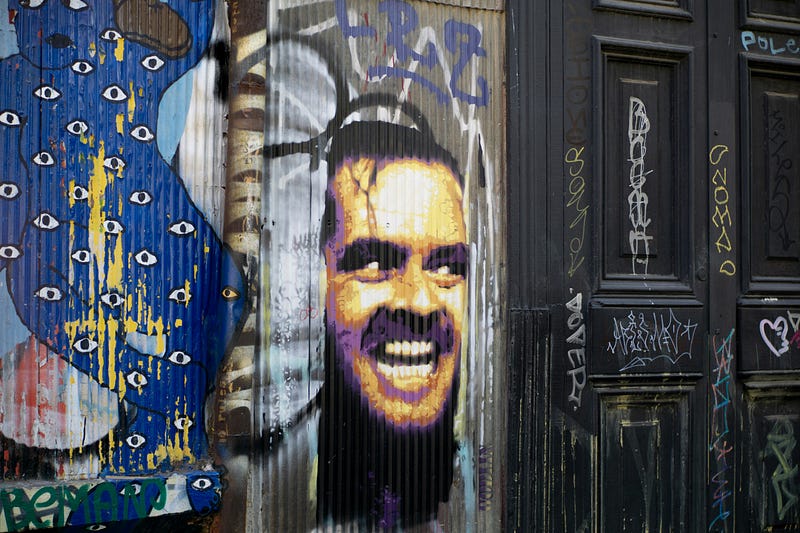
“The Shining” is that film you watch in one breath. “The Shining” is like a phoenix — when it was first released, it was a failure, but over time it became a cult classic, topping its genre and securing a revered place in world cinema. From Stephen King’s initial disapproval to his eventual recognition, the film shows that a movie can fully reveal itself many years after its release. Let’s talk in more detail about each aspect.
Plot, Meaning, Influence
The film is based on Stephen King’s novel of the same name. The director stuck to the general plot of the novel, but the main characters, the ending, and some important (and not so important) moments were altered by Kubrick with his own artistic decisions.
For these changes, Stephen King was critical of the film for a long time. Jack and Wendy Torrance were written very differently by King — radically opposite to what we saw on screen. Wendy was even criticized by critics as the worst character in cinema. Yes, it sounds strange: Kubrick and the worst character (nominated for a “Golden Raspberry” in 1981). We’ll talk more about the characters later.
To me, the plot seemed rather conventional in the horror genre: characters enter a big house, and evil forces influence them — classic. But the way Kubrick interpreted the horror context and the tension he built around the characters is admirable.
In “The Shining,” there isn’t as clear a moral or message as in “A Clockwork Orange”; the meaning is more hidden in the characters’ nature and in the reflection that comes later on the film. Placing yourself in Jack’s shoes, you understand why he does the things he does. You empathize with Wendy’s helplessness and realize why she is portrayed as so weak. Against the backdrop of the parents, you understand why Danny changes and develops his new abilities.
Yes, I felt that Kubrick’s “The Shining” isn’t about the “shining” or the ghosts in the Overlook Hotel — it’s more about secret desires and human nature, which is chained by society and morality, and can only emerge when we are alone with ourselves and allow it to unfold. It’s about helplessness and the realization that we cannot influence the events to come, and about how weak we are in the face of our true nature. It’s about how childhood trauma can change lives and shift priorities from a very young age.
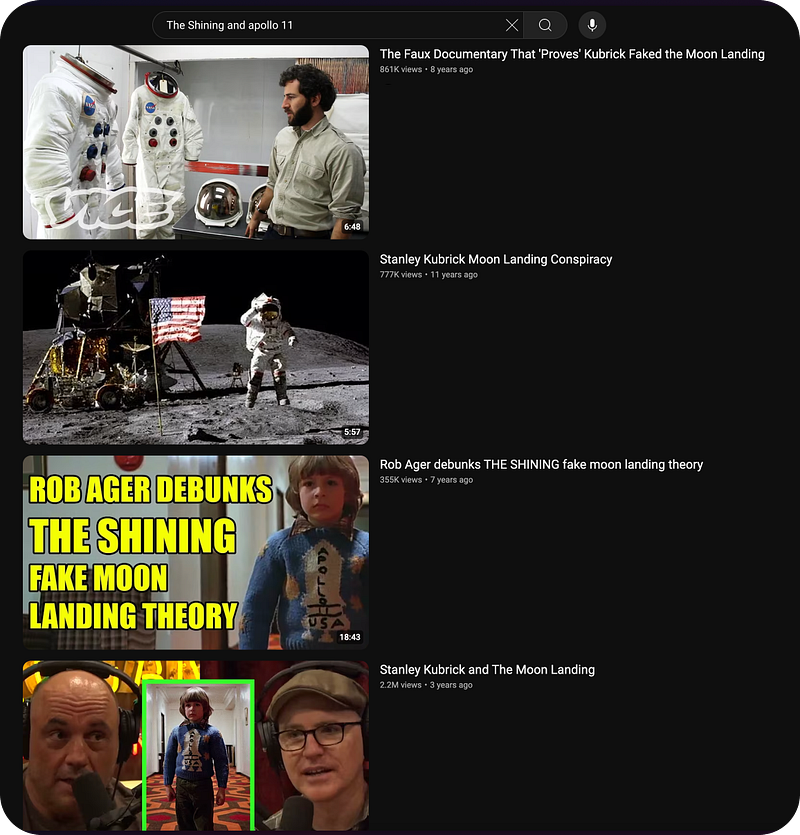
Who hasn’t heard the conspiracy theories about the film? There’s a theory circulating online that Stanley Kubrick filmed revelations and secretly hinted that the Apollo 11 landing didn’t happen on the moon but in a studio with Kubrick directing. It’s interesting to see how people look for hidden messages in the carpet patterns (this is a real argument in the theory). But every idea has a right to exist, and every theory can be heard.
Of course, this is my subjective point of view, reinforced by my perception and speculations. Perhaps Kubrick wanted to depict the biography of an important person, or the Apollo 11 landing, or simply his own interpretation of Stephen King’s novel.
The Impact of “The Shining” on World Cinema
Stanley Kubrick’s “The Shining” had a huge impact on world cinema, especially in the horror genre. He changed the approach to creating fear, focusing on psychological tension rather than typical jump scares or horrifying images. Kubrick created an atmosphere that immerses the viewer in paranoia and madness. Instead of feeling fear and disgust from what’s on screen, you feel a deep unease that alters your internal state and gives you a chill (what we might call “мандраж” in Russian).
One of the key features of “The Shining” was its use of location as a full-fledged participant in the narrative. The Overlook Hotel isn’t just a setting but a living, frightening space that amplifies the tension. This was something of a novelty in cinema at that time.
The metaphorical depth and underlying subtext of “The Shining” also left a significant mark. Kubrick tackled topics like domestic violence, isolation, and social inequality, which inspired directors to add social and philosophical contexts to horror films. Kubrick showed that horror isn’t just about frightening monsters or elevators full of blood.
Acting
Jack Nicholson is one of the few who could play Jack Torrance so well. His manic style truly emphasized the character’s traits and intentions. Looking into Jack’s eyes, you see how madness slowly takes over him — you see his doubts and primal instincts. And of course, we can’t forget about the iconic scene with the axe and his “Here’s Johnny!” — which became not only Nicholson’s trademark but also one of the most memorable moments in world cinema. Just think of how many memes we’ve seen with this scene.
Shelley Duvall as Wendy Torrance: Stanley Kubrick was known for his meticulousness and striving for perfection in every scene, but his methods with actors could be harsh. With Shelley Duvall, he used techniques that, according to her own words, significantly impacted her mental state during filming. Kubrick insisted that the actress experience fear and stress, pushing her to work under high emotional pressure. Shelley said that during filming, she often had to perform under intense emotional strain, and Kubrick placed her in situations that provoked genuine panic.
One of the most famous examples of Kubrick’s cruelty was the scene with the axe, where Wendy has to defend herself from Jack Torrance. Shelley Duvall had to repeat this scene 127 times. And we can see how Kubrick achieved his goal: Duvall’s performance makes you rethink everything. On screen, you don’t see acting, you see the real, raw emotions of a living person — someone who could be your neighbor.
Shelley Duvall faced a difficult road after “The Shining,” and although her performance became iconic and critically acclaimed, the experience left lasting psychological effects on her and affected her career. The psychological stress of working with Kubrick and her departure from public life became important aspects of her story.
Young Danny Lloyd, who played Jack and Wendy’s son, surprised viewers with the depth of his performance. Despite his young age, he portrayed a child with supernatural abilities remarkably well. Kubrick used an unconventional approach by not revealing all the details of the plot to Lloyd, making his reactions more genuine and believable. One of the most memorable moments is when Danny rides through the hotel corridors — his ability to convey fear and anxiety was an essential element of the film. After filming, Lloyd left the film industry, but his role in “The Shining” remains one of the brightest in horror history.
Visuals and Music
Kubrick’s visual style always grabs attention. Symmetry and depth in the frame create an unreal atmosphere. One of the main visual elements is the Overlook Hotel. The space becomes a living, terrifying character, with its corridors and rooms looking both cozy and sinister at the same time. Kubrick skillfully uses the space to show both isolation and the growing sense of claustrophobia. The long corridors, lifeless halls, and empty rooms intensify the feeling that the characters are trapped in this nightmare. Kubrick also frequently uses geometric shapes and symmetry, which adds an eerie, almost sterile, inhuman quality to the atmosphere. Symmetry highlights the paradox where, in an ideal and neatly organized image, chaos and destruction are hidden.
One effective visual technique is the use of long, slow camera movements. Combined with atmospheric music or ominous sounds, this creates tension and the feeling that something terrible is about to happen. The camera often seems to follow the characters, never giving them peace, which amplifies the feeling of paranoia.
The music plays a key role in creating the film’s unique atmosphere. Instead of a traditional soundtrack, Kubrick used compositions that heighten feelings of anxiety, discomfort, and endless threat. Additionally, synthesizer sounds and experimental music create a mystical atmosphere, where the sound design works as a tool of psychological pressure, making the viewer feel the impending danger. This unusual combination of sounds and music helps Kubrick masterfully convey the characters’ inner turmoil, enhancing the film’s visual style and atmosphere.
(still gallery)
https://www.imdb.com/title/tt0081505/mediaindex/?ref_=tt_mv_close
Ending
For seconds back to the story, yes I highlighted the ending because it deserves attention as a pretty important piece.
The ending is one of the most mysterious parts of the film. After the climactic confrontation and the ensuing madness, the viewer is left at the finale, where everything becomes unclear and confusing. This ending perfectly reflects the essence of the film: Kubrick does not provide clear answers. The scene with the photograph remains a mystery, making the viewer reflect on time paradoxes, the cyclical nature of events, and the hotel’s endless influence on its inhabitants. The ending emphasizes that the evil and madness, embodied in the images of Jack and the hotel itself, do not disappear, but remain forever — both historically and psychologically. This conclusion leaves the viewer in a state of unease, as if the hotel and its curse have no end.
Conclusion
In conclusion, “The Shining” is truly unique and unlike anything else. Yes, it belongs to the thriller and horror genres, but it is truly a revolutionary work within its genre — a film that wasn’t fully understood until years later. It’s a work that profoundly impacted the careers of its creators (Shelley Duvall and Danny Lloyd would end their film careers after shooting “The Shining.” Jack Nicholson would go on to play many more morally complex characters). Watching this film, you force yourself to think and figure out the motivations without resorting to blaming evil spirits for everything.
Style, boldness, misunderstandings, greatness, and decline — these are the synonyms for Stanley Kubrick’s “The Shining.” – Renas
 Renas Media